


Reliable backup and prime power systems start with one fundamental decision: fuel selection. Whether specifying a natural gas generator for home, designing a propane generator for house applications, installing a gas generator for house emergency use, or engineering an industrial standby system with bulk storage, fuel choice directly impacts runtime, efficiency, emissions profile, maintenance requirements, and total lifecycle cost.
For installers, fuel selection affects permitting, venting clearances, tank sizing, and code compliance. For end users, it determines outage resilience, operating cost, and environmental footprint. With increasing scrutiny around greenhouse gas (GHG) emissions and growing interest in methane capture technologies, understanding how propane, natural gas, gasoline, and diesel compare has never been more important.
This technical guide examines generator fuel types through four critical lenses:
Combustion efficiency and runtime
Emissions and greenhouse gas impact
Generator tank sizing and autonomy
Application suitability: residential, commercial, and industrial
The goal is straightforward: equip both professionals and facility owners with clear, data-backed insight to select the right system for the right application.

Methane (CH₄), the primary component of natural gas, is one of the most widely used hydrocarbons in the world. Its simple molecular structure—one carbon atom bonded to four hydrogen atoms—contributes to a cleaner combustion process compared to heavier hydrocarbons such as gasoline and diesel.
According to the U.S. Energy Information Administration (EIA), natural gas became the largest source of electricity generation in the United States after 2016, surpassing coal. Since 2005, the transition from coal to natural gas for power generation has contributed to approximately a 42% reduction in U.S. energy-related CO₂ emissions, primarily due to the lower carbon intensity of natural gas combustion.
Where Methane Comes From
Methane is generated through several pathways:
Biogenic methane – produced by biological processes (wetlands, agriculture, livestock digestion)
Thermogenic methane – formed under heat and pressure in fossil fuel deposits
Abiotic methane – produced through non-biological geochemical reactions
Methanogenesis from CO₂ and H₂ – microbial conversion in low-oxygen environments
Anthropogenic methane – emissions from oil, gas, landfill, and agricultural operations
While methane released directly into the atmosphere has a global warming potential approximately 23–28 times greater than CO₂ over a 100-year period (IPCC), controlled combustion in a natural gas generator converts methane into CO₂ and water vapor, significantly reducing its GHG impact relative to vented emissions.
This distinction is critical: using methane in a controlled reciprocating engine is dramatically different from allowing methane to vent untreated into the atmosphere.
Greenhouse Gas Emissions: Natural Gas vs Propane vs Gasoline vs Diesel

GHG emissions are often normalized as kilograms of CO₂ equivalent per 1,000 BTU (kg CO₂e/1000 BTU). This metric allows comparison across fuels based on energy output rather than fuel volume.
Data comparing energy sources shows:
Diesel and gasoline engines exhibit higher CO₂e per unit energy.
Vented methane has extremely high GHG impact.
Methane-fueled reciprocating engines show emissions levels approaching those associated with solar PV systems when lifecycle manufacturing impacts are included.
Flared methane reduces impact relative to vented methane but remains less efficient than controlled engine combustion.
Reciprocating Engine Efficiency
Modern methane-fueled reciprocating engines used in standby and combined heat and power (CHP) systems can reach electrical efficiencies of 35–45%. When waste heat recovery is incorporated, total system efficiencies can approach 90% or greater in cogeneration configurations.
This has implications for:
Industrial facilities using combined heat and power
Wastewater treatment plants capturing biogas
Agricultural digesters producing renewable natural gas
From an installer’s perspective, specifying a natural gas generator for home or commercial application leverages a cleaner-burning fuel with lower particulate emissions and reduced carbon intensity compared to diesel.
Propane Generators: Performance, Emissions, and Practical Advantages
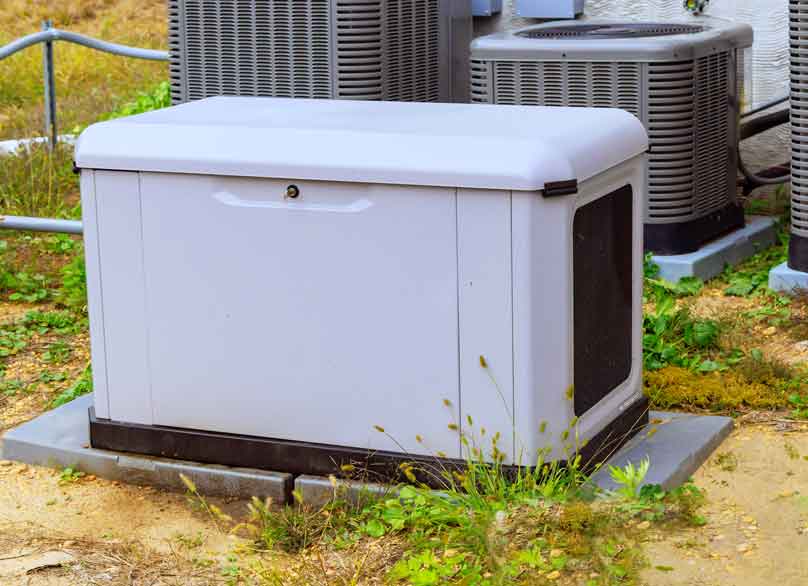
A propane generator operates using liquefied petroleum gas (LPG), primarily propane (C₃H₈). Propane is stored under pressure in liquid form and vaporizes before combustion.
Combustion Characteristics
Propane burns cleaner than gasoline and diesel, producing:
Lower carbon monoxide emissions
Minimal particulate matter
Reduced engine carbon buildup
Longer oil life intervals
The U.S. Environmental Protection Agency (EPA) consistently identifies propane as a low-carbon conventional fuel under its Clean Alternative Fuel Programs.
Storage Stability
One major advantage of a propane generator for house applications is fuel stability. Unlike gasoline, which degrades within months due to oxidation and ethanol absorption, propane does not deteriorate over time. It can be stored indefinitely in a properly maintained generator tank.
This makes propane particularly attractive for:
Residential standby systems
Seasonal properties
Emergency preparedness planning
Maintenance Implications
Clean combustion results in:
Reduced spark plug fouling
Lower carbon deposits
Extended engine life
Fewer fuel system service issues
For installers, this translates into lower long-term service frequency and higher customer satisfaction.
Gasoline and Diesel Generators: Where They Fit

A gas generator (gasoline-powered) remains common for portable and small residential applications due to:
Lower initial purchase cost
Wide fuel availability
Ease of transport
However, gasoline presents drawbacks:
Short storage life
Higher evaporative emissions
Greater maintenance frequency
Fire risk during storage
Diesel generators, widely used in industrial environments, offer:
High torque output
Excellent durability
Strong performance under continuous heavy load
Diesel fuel has higher energy density per gallon than gasoline or propane, contributing to efficient runtime per gallon. However, diesel combustion produces:
Higher particulate emissions
Nitrogen oxides (NOx)
Greater carbon intensity than natural gas
For industrial standby, diesel remains common where fuel storage independence is required and natural gas infrastructure is unavailable.
Residential Applications: Choosing the Right Fuel
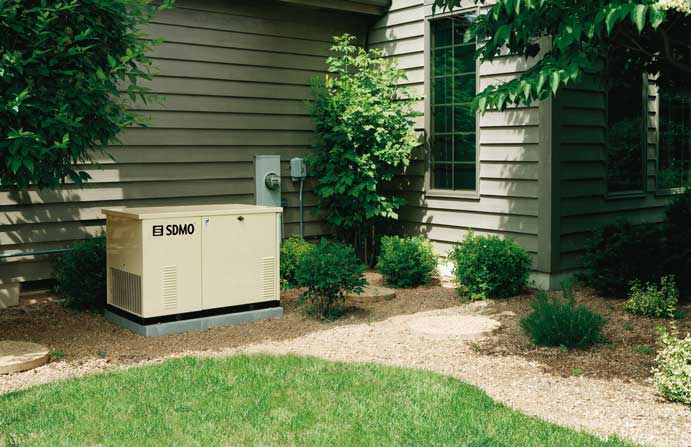
When specifying a natural gas generator for home, installers typically prioritize:
Continuous fuel supply
Minimal refueling logistics
Lower emissions
Quiet operation
Natural gas standby systems are particularly attractive in suburban and urban settings with stable utility gas networks.
A propane generator for house applications is ideal when:
No natural gas line is available
Long-term storage is desired
Extended outage autonomy is critical
Portable gasoline units remain suitable for short-duration outages but are rarely ideal for whole-home standby.
Commercial Installations
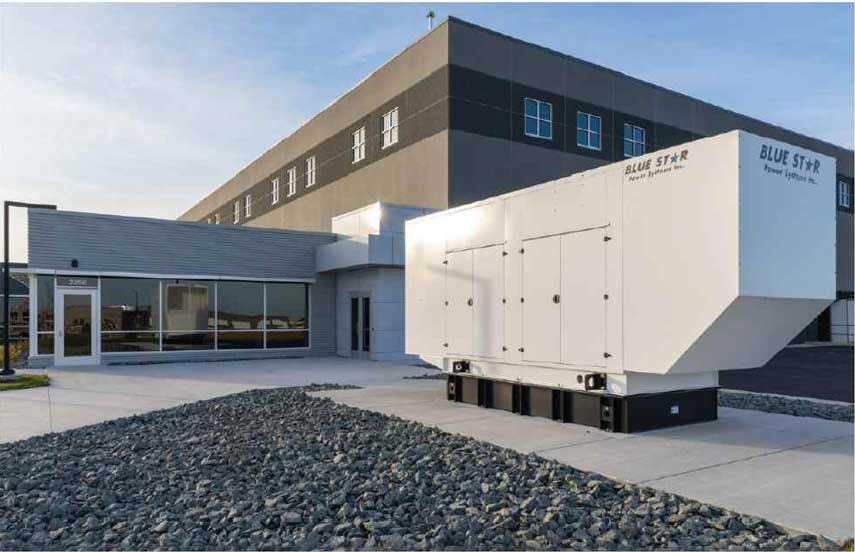
Commercial sites—retail centers, medical clinics, schools—require:
High reliability
Code-compliant fuel storage
Clear emissions compliance
Load management integration
A natural gas generator is often preferred for commercial buildings with existing gas infrastructure due to unlimited runtime and reduced on-site fuel storage liability.
Propane systems offer flexibility in rural commercial settings where gas pipelines are unavailable.
Industrial Use Cases
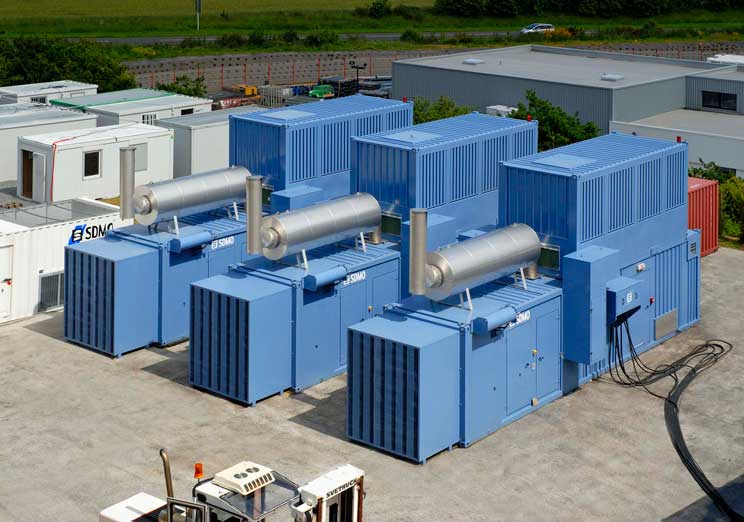
Industrial facilities may require:
Prime power generation
Combined heat and power systems
Continuous operation
High load factors
In these settings:
Natural gas reciprocating engines offer strong efficiency and lower GHG intensity.
Diesel generators provide high durability in remote or off-grid operations.
Methane capture systems (landfill gas, biogas digesters) can fuel industrial-scale generation with substantial emissions benefits.
Industrial generator tank sizing must account for:
Regulatory setback requirements
Fire code compliance
Fuel delivery logistics
Operational redundancy planning
For large propane systems, 1,000-gallon tanks or multiple-tank manifolds are common.
How to Properly Size a Generator Tank for Propane, Diesel, Gasoline, and Natural Gas Systems
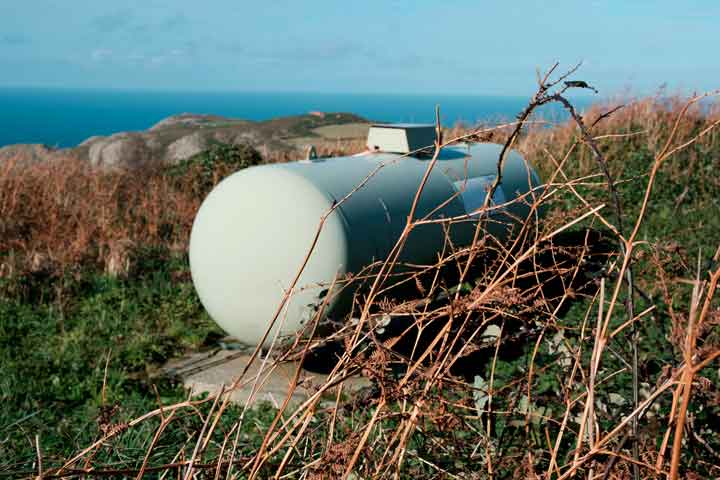
Generator runtime is not determined by tank size alone. It is the result of a direct relationship between:
Generator fuel consumption at a specific load
Desired runtime (autonomy)
Allowable usable fuel percentage
Fuel type energy density
Application risk tolerance (home vs commercial vs industrial)
For installers, incorrect generator tank sizing can lead to fuel starvation, compliance violations, or costly mid-outage refueling. For end users, undersizing the tank can mean losing power before grid restoration.
This section provides a technical methodology for sizing a generator tank for propane, diesel, gasoline, and natural gas systems based on required autonomy.
Step 1: Determine Real Fuel Consumption at Expected Load
Never size a tank based on nameplate full-load consumption unless the application truly runs at 100% load continuously.
Most standby generators operate between 40% and 75% load during outages.
Example (20 kW propane generator):
100% load consumption: 3.74 gallons/hour
50% load consumption: approximately 2.3 gallons/hour
Industrial diesel example (150 kW generator):
100% load: 10–11 gallons/hour
75% load: 8–9 gallons/hour
Natural gas example (20 kW generator):
136 cubic feet per hour (100% load)
Always obtain manufacturer fuel consumption tables for:
25% load
50% load
75% load
100% load
Installers should base calculations on realistic operating load, not theoretical maximum output.
Step 2: Define Required Autonomy by Application
Autonomy expectations vary significantly by use case.
Residential (Natural Gas Generator for Home or Propane Generator for House)
Typical autonomy targets:
24 hours (minimal backup)
72 hours (storm resilience)
96–120 hours (hurricane-prone regions)
Most homeowners selecting a propane generator for house aim for 3–5 days of autonomy.
A natural gas generator for home generally does not require on-site tank autonomy but depends on municipal supply reliability.
Commercial Applications
Typical autonomy targets:
24–48 hours (retail, offices)
72 hours (medical clinics, grocery stores)
96+ hours (data-sensitive facilities)
Fuel delivery logistics must be evaluated. Commercial diesel installations often size tanks for 48–72 hours due to refueling accessibility.
Industrial Applications
Typical autonomy targets:
72–120 hours for standby
5–7 days for remote sites
Continuous prime operation for off-grid systems
Industrial facilities frequently include:
Multiple tanks
Day tanks with bulk storage
Redundant fuel supply systems
Step 3: Apply the Core Tank Sizing Formula
The base formula for liquid fuel systems:
Required Fuel Volume (gallons) =
Fuel Consumption (gallons/hour) × Desired Runtime (hours)
However, usable capacity must account for safety fill limits.
Propane Generator Tank Sizing Formula
Propane tanks are typically filled to 80% capacity.
Adjusted Tank Size Required =
Required Gallons ÷ 0.80
Example – Residential Propane Generator for House
Generator consumption at 50% load: 2.3 gallons/hour
Desired autonomy: 96 hours
Fuel required:
2.3 × 96 = 220.8 gallons
Adjusted tank size:
220.8 ÷ 0.80 = 276 gallons
Conclusion:
A standard 250-gallon tank would be insufficient.
A 500-gallon generator tank (400 usable gallons) would provide approximately:
400 ÷ 2.3 = 174 hours (~7 days)
This explains why 500-gallon tanks are the most common residential standby size.
Diesel Generator Tank Sizing Formula
Diesel tanks do not use the same 80% vapor expansion rule as propane, but practical usable capacity is often limited to 90–95% due to pickup tube position and sediment management.
Adjusted Tank Size Required =
Required Gallons ÷ 0.90
Example – Commercial 100 kW Diesel Generator
Consumption at 75% load: 6.5 gallons/hour
Desired runtime: 72 hours
Fuel required:
6.5 × 72 = 468 gallons
Adjusted tank size:
468 ÷ 0.90 = 520 gallons
Recommended tank: 600-gallon tank for operational margin.
Gasoline Generator Tank Sizing Formula
Gasoline is rarely stored in large permanent tanks due to fire code restrictions and fuel degradation.
For a portable gas generator for house:
Example:
7 kW unit consuming 1.2 gallons/hour
Desired runtime: 24 hours
Fuel required:
1.2 × 24 = 28.8 gallons
Due to gasoline storage limitations, this usually means multiple approved fuel containers rather than one large fixed tank.
Gasoline is not recommended for multi-day autonomy planning.
Natural Gas Generator Fuel Supply Sizing
A natural gas generator for home does not use a storage tank but requires proper gas pipe sizing.
The calculation focuses on:
Cubic feet per hour (CFH) requirement.
Example:
20 kW generator consumption: 136 CFH
Gas utility meter must support:
Generator demand
All other simultaneous gas appliances
Installers must verify:
Meter capacity (CFH rating)
Line pressure under load
Pipe diameter and length (pressure drop calculation)
For commercial and industrial natural gas generator systems, pipeline capacity analysis is mandatory.
Advanced Considerations for Industrial Generator Tank Design
Industrial applications introduce additional variables:
1. Fuel Polishing (Diesel)
Diesel stored longer than 6–12 months may require filtration and conditioning to prevent microbial growth.
2. Redundant Tanks
Critical facilities may require:
Primary tank
Secondary tank
Day tank with automatic transfer
3. Code and Setback Requirements
Propane tank placement must comply with:
NFPA 58 (Liquefied Petroleum Gas Code)
Minimum setback distances
Ventilation clearance
Fire department access
Diesel installations must comply with:
NFPA 110 (Emergency and Standby Power Systems)
EPA SPCC regulations (for large tanks)
Installers must integrate compliance into tank sizing decisions.
Quick Reference: Autonomy by Tank Size (Propane Example)
Using 2.3 gallons/hour consumption:
| Tank Size | Usable Fuel | Approx Runtime |
|---|---|---|
| 120 gal | 96 gal | 41 hours |
| 250 gal | 200 gal | 87 hours |
| 500 gal | 400 gal | 174 hours |
| 1,000 gal | 800 gal | 348 hours |
This demonstrates why:
120-gallon tanks are insufficient for extended outages
500-gallon tanks are standard for whole-house systems
1,000-gallon tanks are common in commercial or rural installations
Residential vs Commercial vs Industrial Tank Sizing Strategy

Residential Strategy
Use 50–60% load estimate
Plan for minimum 72-hour autonomy
Select next standard tank size up
Verify refill accessibility
Most propane generator for house installations use 500 gallons.
Commercial Strategy
Evaluate outage impact cost per hour
Coordinate fuel delivery contracts
Size for 48–96 hours
Add 15% operational margin
Industrial Strategy
Evaluate regulatory requirements
Determine whether generator is standby or prime
Consider redundant tanks
Include heat recovery in methane-fueled systems
Large facilities often design for 5–7 days autonomy.
Final Engineering Guidance
For installers:
Always calculate based on expected load, not maximum load
Verify manufacturer fuel curves
Confirm code compliance
Include safety margins
Educate customers on refill logistics
For homeowners and facility managers:
Define realistic outage duration expectations
Balance installation cost with resilience goals
Consider fuel availability in regional disasters
A properly sized generator tank, whether for a natural gas generator for home, a propane generator for house, a commercial gas generator for house, or an industrial standby system, ensures that the generator delivers what it was purchased for: uninterrupted, dependable power when it matters most.
Emissions Perspective: Responsible Methane Use
Capturing methane from:
Landfills
Wastewater treatment plants
Agricultural digesters
Oil and gas operations
and converting it into electricity through reciprocating engines reduces the climate impact compared to venting or flaring.
When methane is vented directly, its global warming potential is significantly higher than CO₂. Controlled combustion in a generator converts it into CO₂, lowering net atmospheric impact while producing useful energy.
For industrial operators seeking ESG alignment, methane capture paired with power generation provides both environmental and economic returns.
Practical Generator Sizing Methodology
Installers should:
Calculate running wattage of essential loads.
Account for starting (surge) wattage.
Add a 20–25% safety buffer.
Confirm fuel supply capacity.
Evaluate ventilation and placement clearances.
Typical ranges:
Portable gas generator for house: 2–7 kW
Whole-house propane or natural gas generator: 7–22 kW
Commercial standby: 30–200 kW
Industrial systems: 250 kW to multi-megawatt
Final Recommendations for Installers and End Users
Fuel choice is never one-size-fits-all. The correct system depends on infrastructure, runtime requirements, emissions goals, and budget.
For residential applications:
Choose a natural gas generator for home where pipeline supply is reliable.
Select a propane generator for house when storage autonomy is essential.
Use gasoline units for temporary, portable needs.
For commercial facilities:
Evaluate natural gas availability first.
Size generator tank capacity carefully for propane installations.
Ensure emissions compliance documentation.
For industrial operations:
Consider methane-fueled reciprocating engines for high efficiency and lower GHG intensity.
Use diesel strategically where infrastructure constraints exist.
Integrate heat recovery when possible to approach 90% total system efficiency.
Selecting the right fuel strategy improves reliability, controls cost, and reduces environmental impact. When properly engineered, modern generator systems—especially those fueled by natural gas or responsibly sourced methane—offer a strong balance of performance and sustainability.

At Brags & Hayes Generators, we work directly with homeowners, electrical contractors, facility managers, developers, and industrial operators to design systems that are not just compliant — but optimized for performance, runtime, and long-term reliability. Our team understands fuel consumption curves, pressure requirements, tank sizing calculations, methane and propane combustion characteristics, and the regulatory standards that govern safe installations.
If you have questions about:
Selecting between a propane generator, gas generator, or natural gas generator
Determining the correct generator tank size for your desired autonomy
Designing a natural gas generator for home or commercial property
Engineering an industrial backup or prime power system
Upgrading or retrofitting an existing installation
Our technical specialists are ready to assist.
For professional guidance, system design support, or turnkey installation services, contact Brags & Hayes Generators today:
📧 Email: info@bnhgeneratos.com
📞 Phone: +1.954.657.7777
Reliable power is not something you leave to chance. Whether residential, commercial, or industrial, the right system begins with the right expertise. Reach out to Brags & Hayes Generators and ensure your next generator installation is engineered to perform when it matters most.
